Vegan Gluten Free Eating: A Simple Everyday Guide
Build each meal around plant protein such as legumes or tofu, a gluten free base like rice, quinoa or potatoes, vegetables and some healthy fats. Keep the basics ready in the fridge and always check the label for a clear gluten free statement.
Eating vegan and gluten free does not have to mean an empty fridge, endless label reading or meals that leave you looking for something else an hour later. A practical vegan gluten free guide starts from one simple idea: build your choices around real ingredients, plant protein and a routine that fits your actual day.
For many people this is a matter of preference. For others, avoiding gluten is a necessity. Either way, the goal is the same: to eat in a way that is filling, tasty and practical, without ending up with the same two options every day.
What vegan and gluten free means in practice
Vegan means you avoid ingredients of animal origin, such as meat, fish, dairy, eggs and honey. Gluten free means you choose foods that do not contain wheat, barley, rye or anything made from them.
It only sounds restrictive when you think of it as a list of bans. In practice, the base can be rich: legumes, vegetables, fruit, nuts, seeds, rice, quinoa, potatoes, corn, buckwheat and certified gluten free oats. Things you can pronounce and recognise on your plate.
The detail people often miss is whether the food is enough. It is not enough for a meal to be vegan and gluten free. It needs some structure so it carries you through the day. That is where plant protein, good quality carbohydrates, healthy fats and vegetables come in.
Build every meal with one simple rule
You do not need to measure everything. A practical approach is to look at your plate and make sure it includes a source of plant protein, a gluten free carbohydrate base, vegetables and something that adds flavour and healthy fats.
For protein, think lentils, chickpeas, beans, tofu, tempeh, edamame or products made with pea protein. For the base, choose rice, quinoa, potatoes, sweet potatoes, buckwheat or corn. Tahini, olive oil, avocado, nuts and seeds round off the meal without making it complicated.
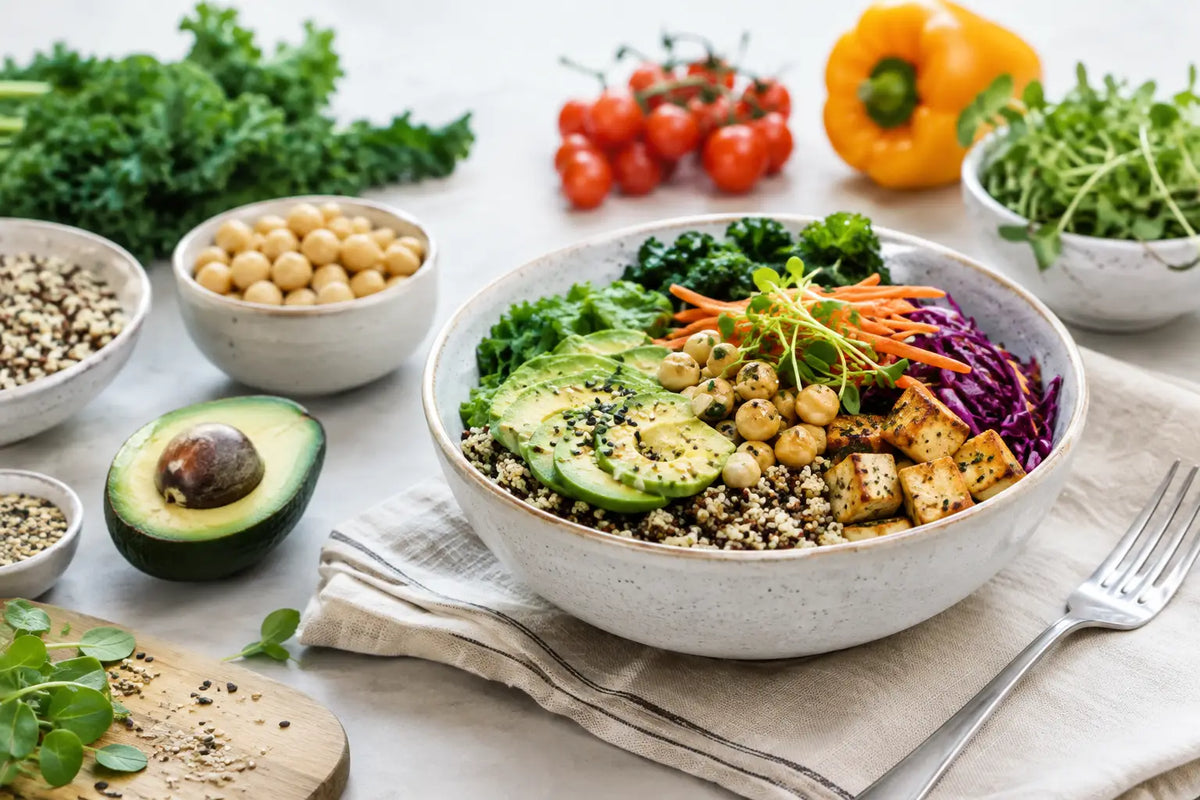
A bowl with quinoa, roasted vegetables, chickpeas, tahini and lemon is a complete option. So is a plate of lentils with rice, salad and olive oil. You do not need exotic ingredients to eat a balanced meal. You need a few reliable combinations that you know work.
A breakfast that is not just fruit
Fruit is a great choice, but on its own it is usually not enough for a breakfast that keeps you going until your next meal. Pair it with plant protein and some fat.
For example, you can go for a plant based yogurt with certified gluten free oats, chia seeds and berries. Another option is gluten free bread with tahini and banana, or a smoothie with a plant drink, fruit, peanut butter and plant protein.
The right choice depends on your time. If you leave in a rush every morning, the best option is not the most impressive breakfast on the internet. It is the one you actually make every day.
Planning for the days you have no time
Consistency does not come from a perfect seven day meal prep. It comes from having the basics ready. Cook one or two protein bases, such as chickpeas or lentils, and keep rice, quinoa, canned legumes, corn and sauces with simple ingredients in the cupboard.
In the fridge, chopped vegetables make a real difference. If you have a salad, roasted vegetables or boiled potatoes ready, a proper meal becomes much easier. Add the protein, a base and a simple sauce, and you are done.
For work or university, aim for options that travel without fuss. A container with rice salad, beans and vegetables works. So does a wrap with a gluten free tortilla, hummus, vegetables and tofu. Your prep does not have to be perfect. It just has to remove friction for the moment you get hungry.
Snacks with substance, not just something quick
Snacks are often where good intentions meet a busy schedule. If you spend many hours away from home, an apple or a few crackers may not be enough. The answer is to look for a mix of plant protein, flavour and convenience.
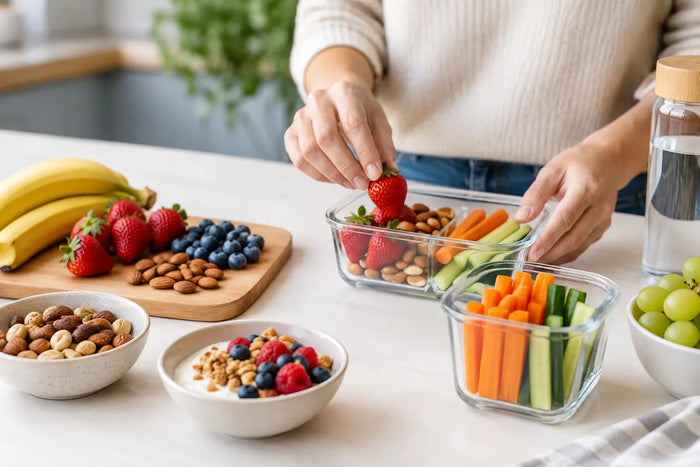
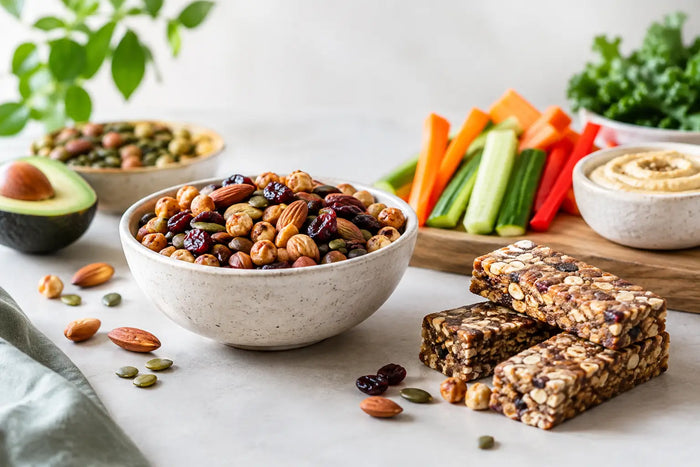
Fruit with nuts, vegetables with hummus or rice cakes with tahini are simple choices. When you need something that fits in your bag, though, check the label. You want to know where the protein comes from, whether the product is really gluten free and what exactly it contains.
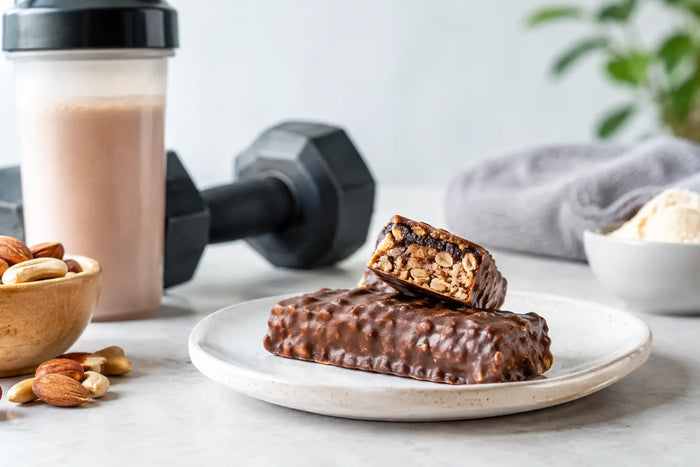
Feel Good Bars are a practical option for moments like these: vegan and gluten free, with 18 g of pea protein per 60 g bar and no added sugar. The sweetness comes from royal date paste, so the bar contains natural sugars. A clean label and a clear choice, with no tricks.
What to check on labels
Vegan does not automatically mean gluten free. In the same way, gluten free tells you nothing on its own about the amount of protein or the quality of the ingredients. A quick look at the label helps you choose with more confidence.
Look for a clear gluten free statement, especially if avoiding gluten is medically necessary for you. Cross contamination can matter, so do not rely only on the fact that a product does not seem to contain wheat. Check the allergens and the ingredients too, because some vegan options have long lists that do not necessarily serve your goal.
Simplicity is a good filter, not an absolute rule. A short list of recognisable ingredients is often easy to assess. Even so, the best choice depends on what you need at that moment: a full meal, a protein snack or something quick until you get home.
A vegan gluten free guide for eating out
Eating out does not have to be a puzzle. Start with dishes that are naturally vegan and gluten free at their base, such as legumes, rice, potatoes, salads and roasted vegetables. Ask clearly for the changes you need and ask about sauces, bread, marinades or fried food that may contain gluten.
Do not assume a salad is always a complete meal. If it has no legumes, tofu, quinoa or another source of protein, you will probably need something extra. A dish can be light, but it does not have to be incomplete.
The same logic applies when you travel. Before you leave, put one or two snacks in your bag that you know will keep you covered. This does not stop you from choosing on the spot. It gives you room to choose calmly, instead of grabbing the first thing available.
You do not have to do it perfectly
Vegan and gluten free eating works best when it is simple enough to follow on a Tuesday at 7:30 pm, not only on a Sunday when you have time. Keep your choices simple, make room for plant protein and pick foods that actually work for you.
A good plan is not measured by how strict it is. It is measured by whether you can keep it going, with flavour, flexibility and food that fits into real life.