How to Test a Protein Bar With Clear Criteria
To judge a protein bar, try it on a normal busy day and rate four things: taste, texture, the ingredients on the back label and how practical it is. Check the grams of protein per bar, not only per 100 g.
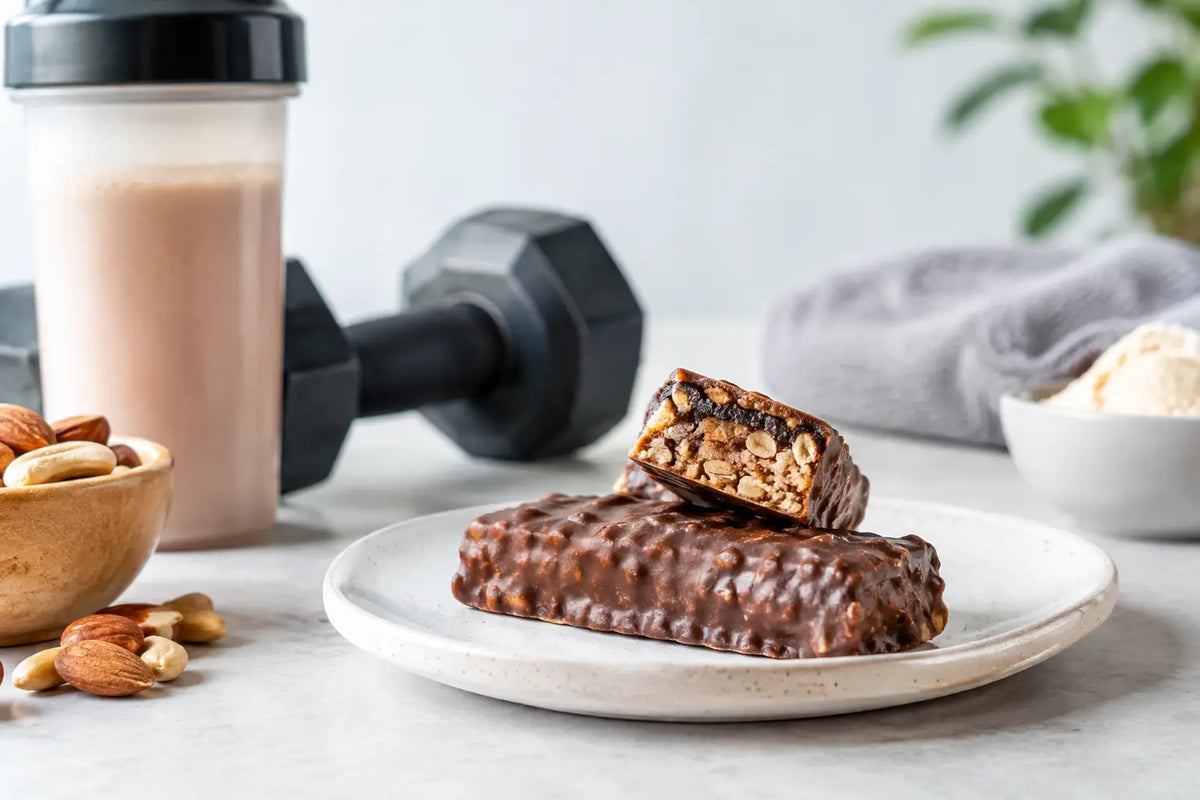
Testing a protein bar takes more than two bites. A good bar should have a taste you want again, a texture that does not tire you and ingredients you understand at first glance. Not a label full of promises. Things you can pronounce.
When your day is full of errands, meetings, commuting or a packed schedule, you do not need another hard choice. You need a snack that fits in your bag, has a clear role in your day and does not require research every time you buy it.
Protein bar test: start with the taste
First impressions count. Not because taste is the only thing that matters, but because a bar you do not enjoy will stay in the drawer. When you try one, notice whether the taste is balanced or too sweet, whether the cocoa, nuts or fruit really come through and whether it leaves an unpleasant aftertaste.
Protein, especially plant protein, can make the texture denser. That is not necessarily a problem. The difference is whether the bar is pleasant to chew or turns dry, sticky and heavy from the first bite. A balanced recipe has body but stays enjoyable.
Texture tells you more than the wrapper
Ask yourself a simple question: would you eat the whole bar or stop halfway? The right texture does not need to copy a pastry shop dessert. It needs to be consistent. It should not crumble in your bag, melt in your hands right away or need a glass of water to finish.
Everyone has different preferences. Some people like a softer, chewy bar. Others prefer crunchy bits or a stronger cocoa taste. That is why it is worth trying more than one flavour before you decide which one becomes your regular choice.
Look at the label, not just the front
The front of the pack often has big words. The useful part, though, is on the back. That is where you see the amount of protein, its source, the sugars, the fibre and above all the ingredient list.
A clean label does not mean as few ingredients as possible at any cost. It means you know what you are eating and why each ingredient is there. If you need a dictionary to understand half the list, the bar may not be as simple as it looks.
How much protein does it really have?
Do not stop at the word "protein". Look at the grams per bar, not only per 100 grams. The portion is what you actually eat. A 60 g bar with 18 g of plant protein, for example, gives you a clear amount without having to work out half portions.
Protein contributes to the growth and maintenance of muscle mass, as part of a balanced diet and an active lifestyle. The source matters too. Pea protein is a plant option with a neutral profile that can work very well in a well made recipe.
If you follow a vegan diet or simply want to vary your protein sources, check that the bar contains no animal ingredients. If you avoid gluten, look for a clear gluten free statement on the pack.
No added sugar, explained clearly
This part needs a little care. "No added sugar" does not mean a product has no sugars at all. It means no sugar or other ingredients have been added for sweetening. If the recipe contains dates, they bring natural sugars along with their typical taste and texture.
This should not be hidden behind vague wording. Transparency is the better choice. Check the nutrition facts, see where the sweetness comes from and decide based on your own preferences and your overall eating plan.
Do not ignore the small print
A proper test also covers the practical side: bar weight, allergens, storage conditions and expiry date. If the bar is for the hours you spend away from home, check whether the wrapper opens easily and whether the bar holds up in a backpack or at the office.
These look like small details, but they decide whether a product becomes part of your routine. The best bar on paper is worth little if it is not practical in real life.
Try it in real conditions
Do not judge a bar from one random moment. Take it with you on a busy day, on a trip, to the office or to class. Notice whether it is easy to carry, whether the taste stays pleasant until the last bite and whether it feels like a choice you can repeat.
Do not chase the "perfect" bar based on a single number. Some people choose mainly for the grams of protein, others for the taste, for being gluten free or for being vegan. The right choice is the one that covers your own key criteria without compromises you do not want to make.
A good test is to rate four things: taste, texture, ingredients and convenience. If one of them falls well short, you will probably not go back to the product, however impressive the packaging is.
A choice made to be repeated
Feel Good Bars combine 18 g of pea protein in every 60 g bar with sweetness from royal date paste and no added sugar. They are vegan, gluten free and made in Greece in an ISO certified facility. There are six flavours, so you do not have to stick to the same one every time.
The goal is not to make your eating more complicated. It is to have an option you know the contents of, that you enjoy and that you can always keep on hand. When you find the flavour that suits you, keep it close. Consistency often starts with something as simple as a snack you actually want to eat.