Gluten Free Snacks Guide for Every Day
A good gluten free snack says gluten free on the pack, has protein and fibre and contains no wheat, barley or rye. Fruit, nuts, yoghurt and gluten free bars are easy options.
At 16:30 in the office you do not need another coffee and a random biscuit. You need energy that lasts, a taste that satisfies you and ingredients you can identify. This gluten free snacks guide is for the days you run from a meeting to training, from school to work, or you simply want something better than the usual "whatever I found at the kiosk".
A gluten free diet does not have to be restrictive, bland or full of complicated labels. The right snack is practical, filling and fits your pace. No tricks. No unnecessary sugar. No sudden crash that leaves you hungry shortly after.
What a good gluten free snack really means
"Gluten free" on its own is not enough. Many products may contain no gluten but still rest on a lot of sugar, processed flours or fat that gives you no real satiety. It is an indication about the formula, not an automatic guarantee of quality.
A snack that earns a place in your bag combines three things, a clean formula, nutritional value and convenience. You want to be able to eat it on the metro, between two calls or after training, with no preparation and without wondering whether it will hold you.
Protein helps a lot here. Together with fibre and natural energy sources, it can make a snack more filling and steadier than an option that relies only on simple carbohydrates. It is not magic. It is simple, functional nutrition.
Gluten free snacks guide: read the label
The pack says a lot, as long as you look at the right places. Start with the ingredients, not the front with the big promises. A short and recognisable list is usually easier to judge than a label full of terms you cannot pronounce.
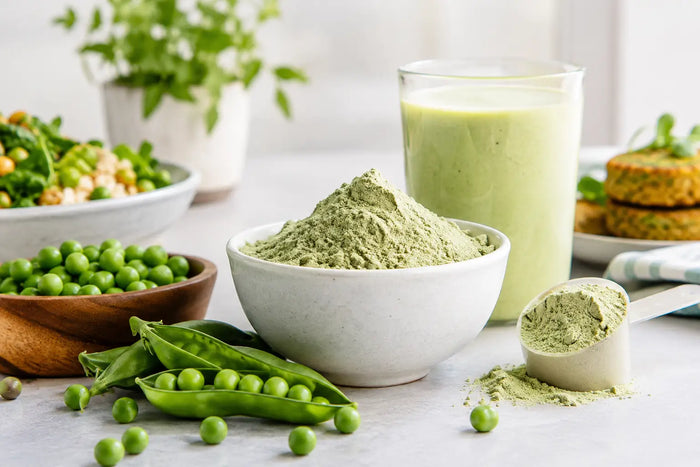
Look for sources such as nuts, seeds, fruit and plant protein. If you want steadier energy through the day, prefer options with a meaningful amount of protein rather than just a trace for the marketing. The amount you need depends on your overall diet, your hunger and your activity, but 15 to 20 g of protein in a snack is a very different experience from a sweet with barely any protein.
Also look at added sugar. Natural sweetness from dates or fruit is not the same thing as a long list of added sweeteners and syrups. That does not mean every natural ingredient is "free" to eat without limit. It means you know where your sweetness comes from.
Gluten can hide where you do not expect it
Cereal bars, chocolate snacks, crackers, sauces and oat products are not always safe choices. Oats, for example, are naturally gluten free, but they can come into contact with wheat, barley or rye during production and packaging.
For someone who simply chooses gluten free snacks as a personal preference, reading the label is usually enough. For people with coeliac disease or a medically confirmed sensitivity, attention to cross contamination is essential. There you make no compromises, you look for a clear gluten free declaration and you always follow your health professional's guidance.
When you need each type of snack
Not all snacks are for the same moment. Before training, you usually want something easy to digest that gives you energy without weighing you down. Afterwards, an option with protein can be more useful, especially if a proper meal is still a while away.
At the office, the point is not to let hunger push you into the first easy option. A filling snack in your drawer or backpack creates distance from empty calorie picking. You do not need to be perfect. You need a better option available when the day gets demanding.
For the evening snack, think about what you actually need. If it is hunger, a protein bar or plant yogurt with nuts can cover you. If it is simply the need for something sweet, pick a portion you enjoy and eat it consciously, rather than opening whatever is in the cupboard.
Options that work in practice
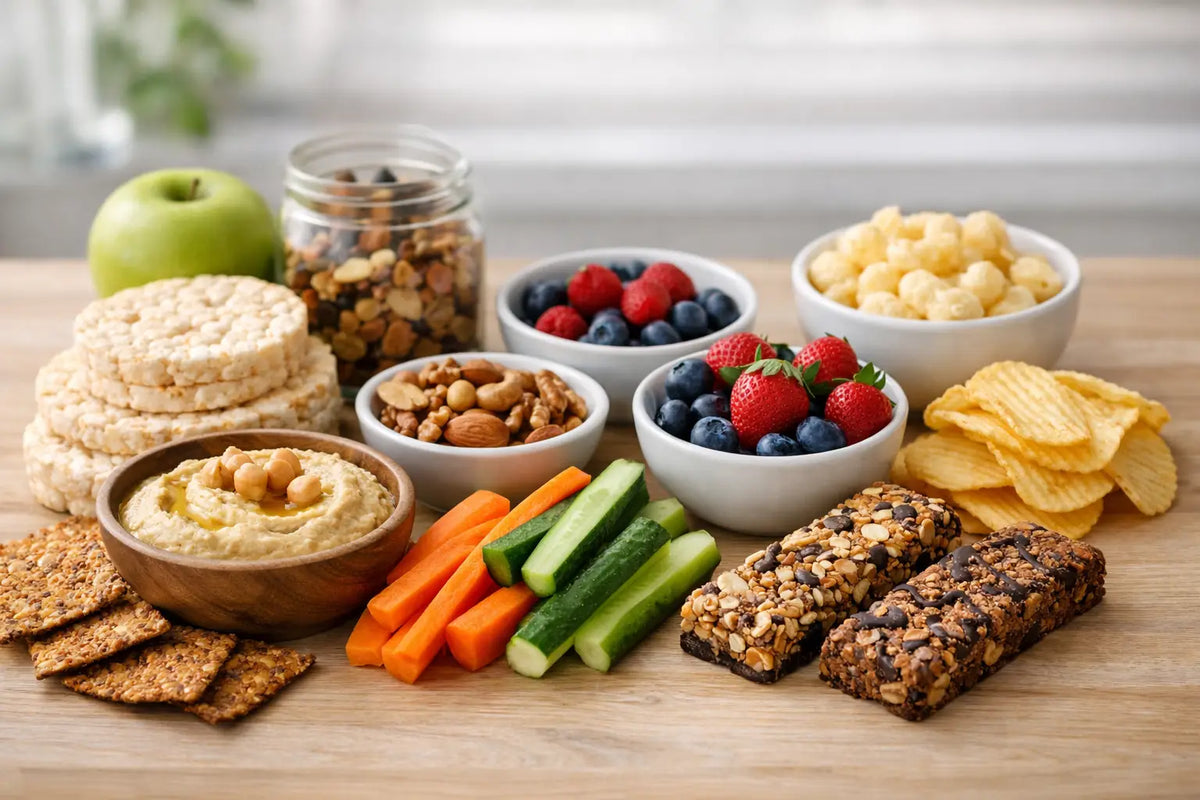
Fresh food is always a strong base. A piece of fruit with a handful of nuts, rice cakes with tahini or hummus with vegetables are simple solutions that need little thought. They do have one drawback though, they are not always easy to carry, keep or have ready on a busy day.
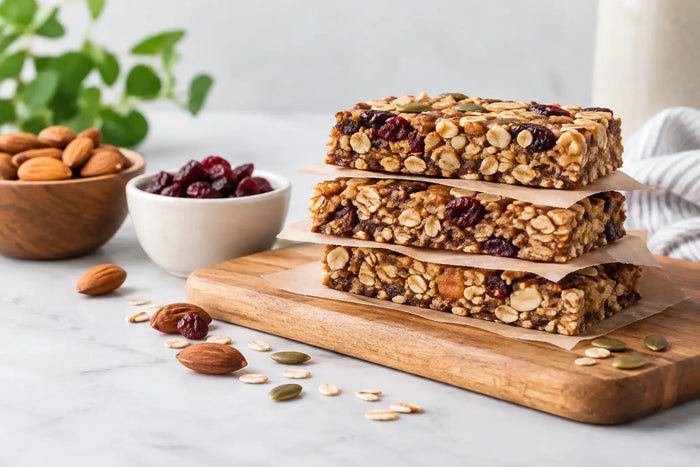
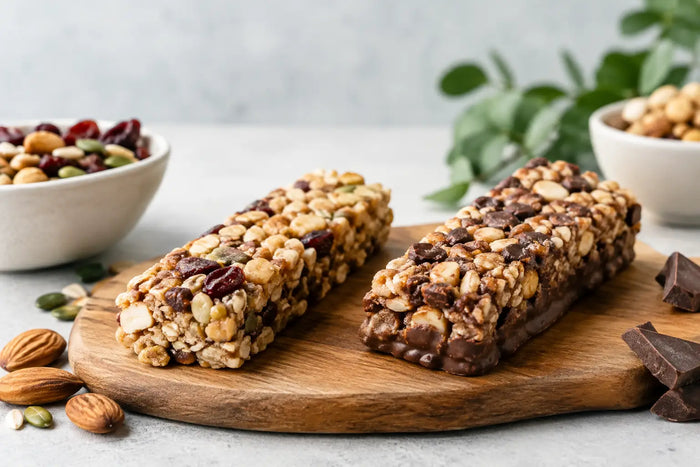
That is where ready bars have their place. Not as a substitute for every meal, but as a smart solution when time is short. The difference is in the choice, a bar with plant protein, no added sugar and ingredients you recognise can become a daily tool rather than just an emergency snack.
Feel Good bars combine 18 g of plant protein, natural sweetness from royal dates, and a vegan and gluten free formula. They are crafted in Greece and made for that gap between "I have no time to eat" and "I do not want to compromise". Six flavours mean you can keep your choice interesting without changing the routine that works for you.
Do not leave availability to chance
The best nutritional intention falls apart when you are hungry and have nothing with you. Build a small system that helps, one snack in your bag, one at the office and one in the car or the kitchen cupboard. You do not need dozens of options. You need the right options, in the right places.
If you eat bars often, a steady supply removes one more small decision from your week. A flexible subscription with monthly delivery, the option to skip or cancel and a discount of up to 20% is not just easier shopping. It is a way to avoid being left with an empty drawer exactly when you need it.
Balance does not need extremes
Gluten free snacks are not "good" because they say gluten free, nor do they need to be the centre of your diet. The base is still proper meals with variety, vegetables, protein, carbohydrates and good fats. The snack is there to support your day, not to fix it on its own.
Pick what suits your needs, look at the label and keep it simple. When you carry real ingredients and energy that lasts, the next hungry ten minutes does not have to decide for you.