When to Eat a Protein Bar During a Busy Day
The best time for a protein bar is when the next proper meal is still hours away, usually late morning or mid afternoon. A 60 g bar with 18 g of pea protein holds you until you can sit down and eat properly.

The question of when to eat a protein bar does not have one answer that works for everyone. The right moment is usually the moment your day leaves no room for a proper, filling meal and you want a snack with some substance. At the office, on the road, between meetings or after hours away from home, a bar can work well in practice, without turning your diet into a programme run by the clock.
A protein bar is not a magic product and it does not replace every meal. It is, though, an easy way to have plant protein available in the moments when you usually end up with something quick, sweet or simply not enough. The point is not to find the perfect time. It is to recognise the moments when you need a better option.
When to eat a protein bar in practice
The most useful time is the one that catches you before you reach the point of eating whatever is in front of you. For some people that is 11 in the morning, for others 5 in the afternoon. If you work through back to back calls, move around the city or spend the day between the office, classes and training, the bar can become the steady snack you already have with you.
You do not need to treat it as an obligation. If your breakfast was a full one and lunch is close, you probably do not need it at that moment. If, on the other hand, you know that many hours will pass before your next meal, it is a more deliberate choice than staying hungry until late.
On the morning that turned out rushed
There are mornings when the coffee is ready but breakfast is not. It is not ideal for that to happen every day, but it is realistic. A protein bar can go with your coffee when you leave in a hurry, especially when there is no time to prepare anything.
It does not need to be presented as a full breakfast for everyone. If you have the time and the appetite, a proper meal with different food groups is another experience. But for the day when breakfast would otherwise be coffee alone, a bar with protein is a clearly more practical solution.
Between the two big gaps in the day
The afternoon gap is probably the most natural place for a bar. You have had lunch, dinner is still far off and your focus drops along with your patience for poor choices. You do not need complicated nutrition theory there. You need something that fits in a bag, a drawer or the car and can be eaten with no preparation.
That is also why the snack has to taste good. Practicality on its own is not enough if the choice does not please you and ends up forgotten at the office. Consistency is built from small decisions that are easy to repeat.
In the hours around training
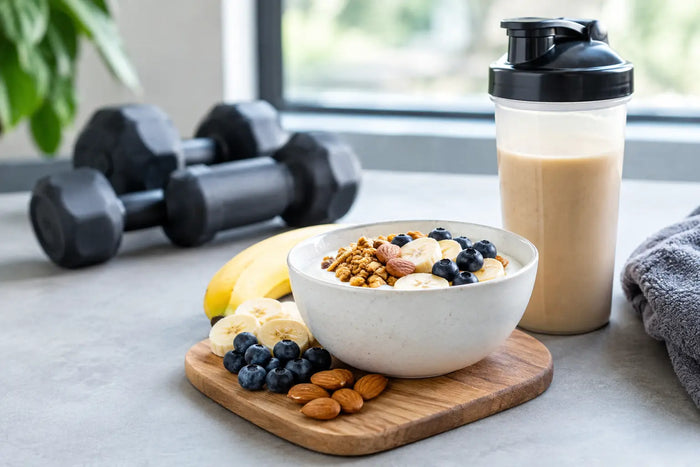
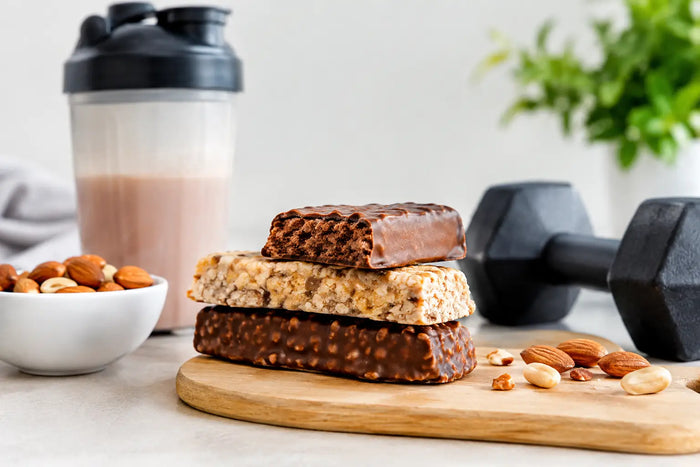
If you train after work or between other commitments, the bar is a solution for the hours when you cannot sit down for a meal. The right moment depends on when you last ate, how long you have until your workout and what sits well in your stomach.
Some people prefer to eat it well before they start, others afterwards, when the day carries on and there is no immediate access to real food. There is no reason to push yourself to follow a specific minute on the clock. Your overall diet, the amount of protein you get through the day and consistency in your habits matter more than a narrow window of time.
What to check before you pick a protein bar
Timing is not the only criterion. If a bar is going to become part of your routine, read the label without being carried away by big promises. Look at the amount of protein, where it comes from, the ingredients and what the nutrition claims actually mean.
The phrase "no added sugar" means that sugar has not been added as an ingredient. It does not mean there are no natural sugars. When a bar contains dates, the sweetness comes naturally from them and the nutrition label shows it. That is the clear picture: you know what you are eating and why it tastes the way it does.
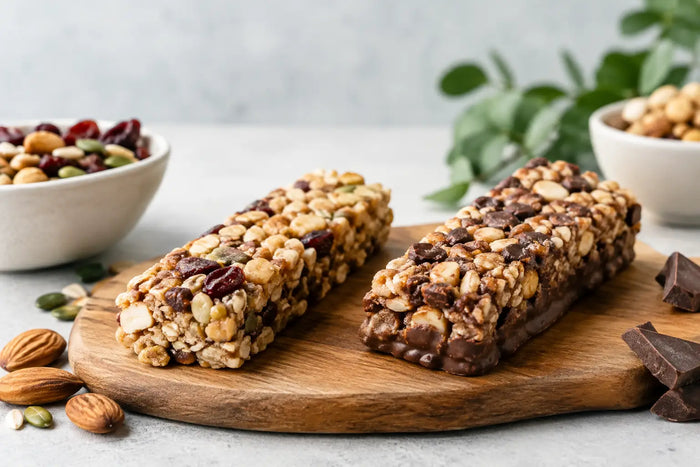
It helps just as much to choose ingredients you can pronounce. Royal date paste, pea plant protein, cocoa, nuts or other familiar materials tell a simple story. Things you can pronounce. No tricks.
A bar is not the answer for every meal
Convenience has value, but it does not need to turn into monotony. A protein bar is a snack. It does not systematically replace a meal with vegetables, legumes, grains, fruit and the rest of the foods that give your day variety.
Think of it as a highly useful backup. You have it when the schedule gets away from you, when the distance to the next meal grows or when you need something quick that fits your choices. You do not need to eat it just because it is available. You need to choose it when it solves a real problem.
If you notice that you rely on bars several times a day because you never manage to eat, the issue may not be the bar. Your weekly food may need a little better planning, even if that means a simple lunchbox or fruit at home and at the office.
A choice that follows your own pace
Feel Good Bars are designed for exactly these everyday moments. Each 60 g bar gives you 18 g of plant protein from peas, is vegan, gluten-free and has no added sugar. Its sweetness comes from royal date paste and the natural sugars vary by flavour, from 10 to 18.4 g per bar.
They are made in Greece, in an ISO certified facility, and come in six flavours so that practicality does not end up meaning a boring choice. This is the bar you can keep in your bag, at the office or in the car, confident that you know what is in it.
You do not need to wait for the perfect time to eat a protein bar. Keep one close for the hours when the day runs faster than your schedule, and choose it when you want a snack with clean, simple ingredients and some substance.