Protein bar labels: how to read one in 20 seconds
How to read a protein bar label fast: the protein number, the first ingredients and where the sweetness comes from. Plain rules, no marketing tricks.
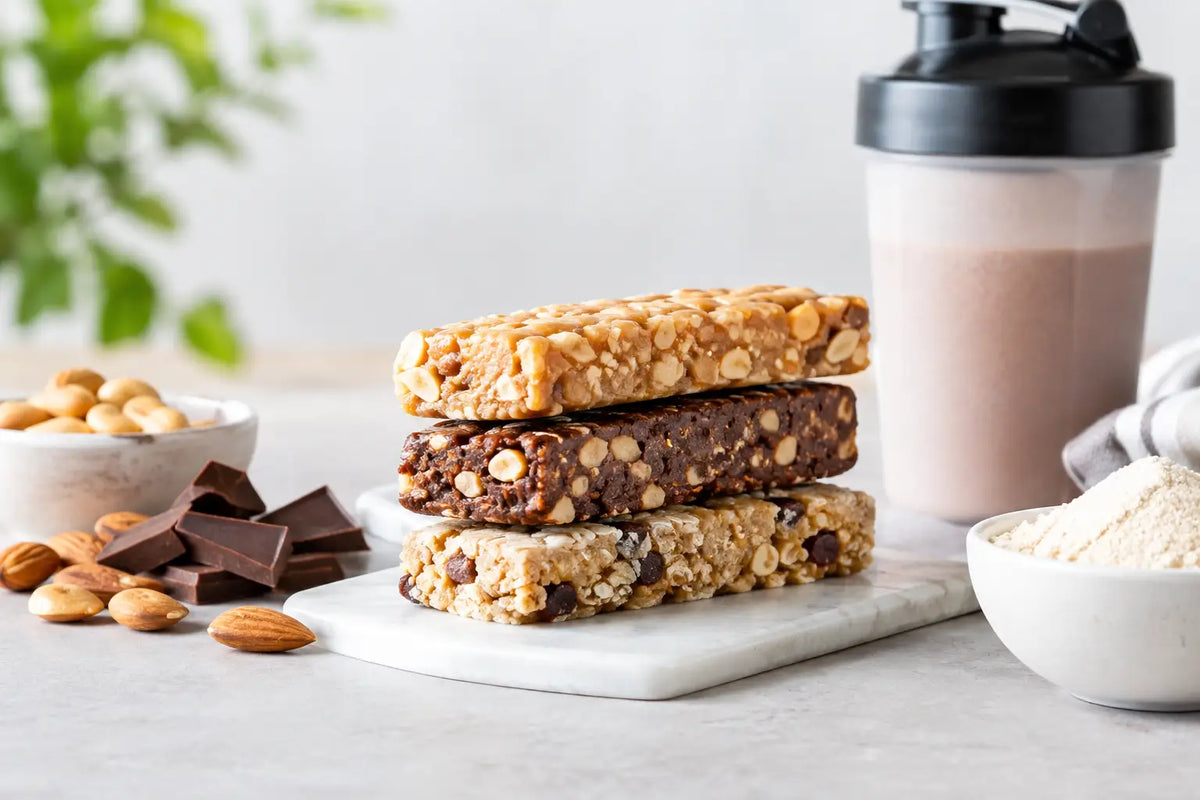
The pack says protein, the photo shows nuts, and the bar looks like an easy choice. Then you turn it over. The back of the pack is where you find out whether you are holding a snack that carries you through the afternoon or a sweet with just enough protein to justify the name. This guide gives you the few things worth checking, and you do not need a nutrition degree for any of them.
You are not looking for the perfect bar. You are looking for the right one for the job: something filling between meetings, something practical after training, something clean for the days when a proper meal is not going to happen. The label tells you which one you have. Read it from the back forward.
Start with the protein
The first number most people look at is grams of protein per bar. Useful, but not enough on its own. A bar with 3 or 4 grams can taste great and still do nothing as a protein snack. If you want it to hold you until the next meal, or to cover you after a workout, look for a number that actually does some work.
Protein also needs context. Check the weight of the bar, not only the big number on the front. Ten grams in a small bar means something different from ten grams in a much larger product carrying plenty of calories and sugar. Eighteen grams of plant protein, for example, is a number that holds up when you need something filling at your desk, in your bag or on the road.
Plant protein: what to look for
Vegan does not automatically mean balanced, and dairy protein does not make a product better by itself. Look at where the protein comes from and whether the recipe stays simple. Pea, rice, pumpkin seed or a blend of plant sources can all work well in an everyday bar.
More useful than memorising protein sources: do you recognise most of the ingredients, and can you tell why each one is in there? When the list is clean, the choice gets easier. Things you can pronounce, no tricks.
Sugar is more than the number on the panel
No added sugar is a useful claim, as long as you read it correctly. It means no sugar was added as an ingredient. It does not mean zero sugars, because ingredients like dates carry sugars of their own.
That is not a problem. It is the difference between knowing what you are eating and trusting a word on a wrapper. Royal dates, for instance, bring sweetness and texture without refined sugar. For a lot of people that is a more familiar and cleaner choice than a long mix of syrups and sweeteners.
Check the order of the ingredients too. They are listed by weight, highest first. If syrups, sugar or one of its many aliases sit near the top, the bar is leaning on sweetness more than on what it gives you as a snack.
None of this means fearing every gram of sugar. If you train hard, spend hours out of the house or want quick energy before an activity, your needs change. The right choice depends on the moment. The point is not to buy something for its protein and walk away with dessert.
Read the ingredients, not the claims
The front of the pack gets your attention. The back earns your trust. A short list of ingredients you understand is no guarantee that a product suits everyone, but it usually makes the comparison a lot clearer.
Look for ingredients with a reason to be there: nuts or nut butters for taste and texture, cocoa, real fruit, plant protein, seeds. When the label reads like a lab report and the flavour depends on a stack of additives, it is worth a second thought.
Additives are not all the same and there is no sense in treating them as villains. Some help with texture or shelf stability. But a protein bar you eat on ordinary days does not need to look like a supplement pressed into bar shape. Simple has real value, especially when you plan to eat the same snack often.
Fibre and polyols, in moderation
Fibre makes a snack more filling and can support a steadier feeling of energy. Check the amount, but do not decide on it alone. A bar with plenty of fibre, very little protein and a pile of sweeteners is not the better option.
Check for polyols as well, such as maltitol or erythritol. Some people handle them without a second thought. Others get bloating or discomfort, especially when they eat bars often or more than one a day. There is no single answer here. If you know your stomach is sensitive, a recipe with fewer of these will probably suit you better.
Do not skip calories and portion size
Calories are not a grade. They are information. A bar with more protein, nuts and natural fats will reasonably carry more energy than a small, light snack. The question is whether that energy matches what you need it for.
For a real break between two meals, a bar that combines protein, fibre and good fats will cover you far better than a sweet that has you looking for something else half an hour later. Next to a coffee, you might want something smaller. Read the portion as it is, not as you would like it to be.
Gluten free, vegan and allergens
If you avoid gluten or animal ingredients, these markings matter. For some people it is a lifestyle choice, for others it is intolerance or medical need. Either way, always read the allergen statement as well.
Nuts, sesame, soy and traces of other allergens should be clearly declared. Do not rely on pictures or on a general promise on the front. When there is an allergy or coeliac disease involved, the small print is not small.
How to choose in 20 seconds
Standing at the shelf or scrolling on your phone, you do not need to analyse everything. Ask three quick questions: how much protein per bar, what are the first ingredients, and where does the sweetness come from. Clear answers filter out most of the shelf.
Then comes the most underrated question: will you eat it again? The best nutritional intention does nothing if the bar is forgotten in a drawer. Taste counts. Texture counts. So does having a box you trust within reach at home or at the office.
Feel Good is built on exactly that logic: vegan, gluten free bars with 30% plant protein, natural sweetness from royal dates and real ingredients. Crafted in Greece, with 18g of protein per bar and no added sugar, for the days you want to keep going without settling for whatever is nearby.
A good label does not need to shout. It just needs to give you clear answers. Find the bar that fits your rhythm, that you actually look forward to, and that holds up on the days that leave no room for complicated decisions.