How to Avoid the Afternoon Energy Crash
To avoid the afternoon energy dip, eat a lunch with protein and fibre, drink water and have a protein snack ready for 4 pm. Coffee on its own is not enough.

At 4 in the afternoon what you usually lack is not willpower. It is fuel. If you are wondering how to avoid the afternoon energy crash, the answer is not another coffee and it is not something sweet grabbed in a hurry. It is building steadier energy earlier in the day, with choices that work in real life, at the office, at school, in the car, between meetings and training.
The afternoon crash is sneaky because it feels normal. Focus drops, appetite opens up, your head gets foggy and suddenly you are looking for anything easy. The problem is that quick fixes usually make the cycle worse. They give you a fast lift and then leave you emptier than before.
What causes the afternoon energy crash
Most of the time it is not one single thing. The crash is the result of small choices that add up during the day. A breakfast heavy in simple carbs, long hours without food, very little protein, not much water and a lot of coffee can easily get you there.
The most common cause is sharp swings in blood sugar. When you eat something that lifts your energy fast, like a dessert, a white bread product or a snack with a lot of sugar, you feel better straight away. But the drop that follows is often just as sharp. And that drop usually shows up exactly where you fear it most, in the middle of the afternoon.
Timing matters too. If you leave big gaps between meals, your body has no steady supply. If instead you eat a very heavy lunch, you may feel sleepy and sluggish rather than steady and productive. This is not about being perfect. It is about balance.
How to avoid the afternoon energy crash starting in the morning
Afternoon energy starts earlier than you think. If the first meal of the day is low in protein and fibre, there is a good chance you will get hungry early and fall into a cycle of snacking. A breakfast that keeps you going does not have to be complicated. It has to have structure.
Protein helps with better satiety and stability. Complex carbs support a smoother release of energy. Good fats round out the meal and help you avoid feeling empty an hour later. When all of that is missing and you only have something quick, your body reminds you about it later.
If you know your day is going to be busy, do not leave it to luck. Steady energy takes a little planning. Not three hours of meal prep. Just having something with you that actually supports you when you need it.
A lunch that does not drag you down
Lunch is often where the rhythm breaks. If it is too heavy, too fatty or full of simple carbs, it can send you straight into an afternoon slump. If it is too small, you will get aggressively hungry soon after.
The middle ground is usually the most practical. A meal with protein, vegetables and a sensible amount of carbs helps more than a huge plate that pins you to your chair. If you also train in the afternoon, it gets even more practical. You do not want to feel heavy and you do not want to feel empty.
The snack that makes the difference
This is where a lot gets decided. A good afternoon snack is not there to kill a craving for ten minutes. It is there to keep you functional until the next meal, without a sharp rise and fall.
That is why it is worth reading the ingredients properly and not just the calories. A snack with protein, no added sugar and simple, recognisable ingredients does a different job than a typical processed product. It gives you steadier support, not just a sweet break.
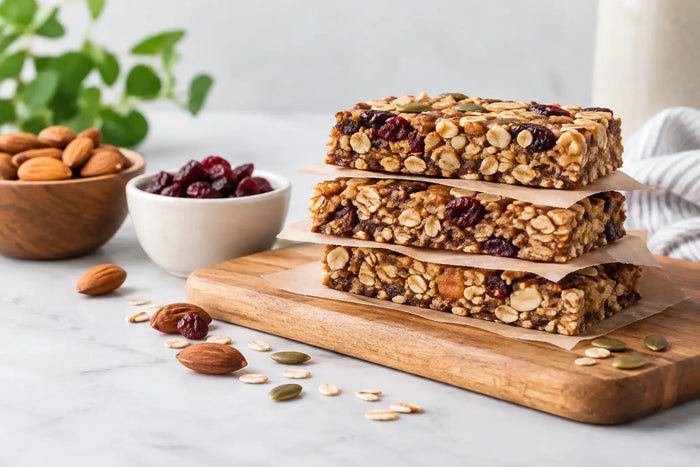
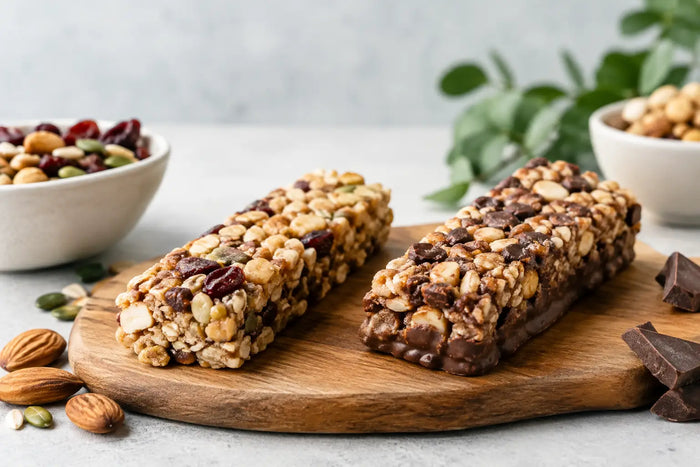
Bars are a clear example of how much the label matters. You get one experience from something built on sugar and syrups, and a very different one from a snack designed for steady energy and satiety. When there is plant protein in a meaningful amount and you are not relying on a product that only looks fit, the result in practice is different.
For someone who is out of the house, working, moving around and does not want drama with their energy, convenience counts. A clean, vegan snack with no added sugar that fits in a bag and takes two minutes to eat can be the difference between a productive afternoon and a classic crash. That is where something like Feel Good fits naturally into the day, with real ingredients, 18g of protein and no tricks.
When to eat it
Timing is almost as important as the snack itself. If you wait until hunger takes over, you are usually already late. At that point your body wants an immediate reward and the chance of picking something very sweet goes up.
For most people it works better to have a small meal or snack around 2.5 to 4 hours after lunch, depending on how filling lunch was. If you train later, the afternoon snack also works as a bridge to better performance. If you work late, it helps you get to dinner without being exhausted and uncontrollably hungry.
Coffee is not a strategy
Coffee has its place. It is not the enemy. But it is not the answer to every energy dip either. If the crash comes because you have gone six hours without food, or because lunch was plain white bread and something quick, coffee just covers the problem for a while.
Also, the later in the day you drink coffee, the more you risk affecting your sleep at night. And that starts another vicious cycle. Bad sleep, low energy, more cravings, a bigger crash the next day. So if you are looking for how to avoid the afternoon energy crash, think of coffee as a tool and not as a crutch.
Water, movement and small habits that actually help
Dehydration turns into tiredness faster than you expect. There is no need to make it complicated. If you have had very little water since the morning, it makes sense that your body starts to fade. Sometimes the first step is not eating something, it is covering that basic need.
A short movement break helps too. Not because it works miracles, but because it gets your body out of a static position. A ten minute walk, a few flights of stairs or simply standing up from your chair can noticeably change how you feel. It does not replace proper food, it works alongside it.
The same goes for sleep. If you consistently sleep too little, no snack can fully cover the gap. The right approach is a combination. Regular meals, a smart snack, water, fewer long gaps, a bit of movement and more careful use of coffee.
What to check if the crash keeps coming back
If you do enough of the above and still feel drained every day, it is worth taking it a bit more seriously. Sometimes tiredness is not just a question of snacks or timing. It can be related to poor sleep, very high stress, too much training or even a deficiency.
There is no need to panic, but there is a need to be honest. If the afternoon always finds you empty, the answer is not to push yourself harder. It is to see where your day is losing energy and fix it in a practical way.
The most useful approach is not chasing magic boosts. It is building consistency. Clean food, enough protein, less sugar, smart timing and snacks that do a real job. Good energy should not be a matter of luck. It should be something you can count on every day.