What Does No Added Sugar Actually Mean?
No added sugar means no sugar or other ingredient was added to sweeten the product. It does not mean sugar free: the natural sugars of the ingredients, such as dates, remain.
You see the phrase on a bar, a yogurt, a plant drink or a cereal and you naturally think something simple, so it has no sugar. That is where the confusion starts. What no added sugar means is not that a product is unsweetened, nor that it has zero sugars. It means something more specific, and if you want to eat more cleanly, it is worth knowing.
Because in practice you are not buying a label. You are buying energy for your day, satiety, taste and a steadier relationship with your snack. No tricks.
What no added sugar means in practice
When a product says "no added sugar", it means that during production no sugars or foods used for their sweetening properties have been added. In plain terms, the manufacturer has not put in crystal sugar, glucose syrup, fructose syrup or any other ingredient purely to make it sweeter.
That does not mean the product contains no sugars at all. If it contains natural sugars from ingredients such as fruit, dates or milk, those count nutritionally and they will show up in the nutrition table. So "no added sugar" is not the same as "no sugars".
The difference matters. Especially if you choose snacks to avoid sharp ups and downs through the day, or if you are looking for a cleaner, more balanced option.
It is not the same as sugar free
This is where the biggest mix up happens. Many people read "no added sugar" and automatically translate it as sugar free. That is not correct.
A sugar free product usually means it has very low or zero sugar content, depending on the claim and the legislation. A product with no added sugar can contain natural sugars from its own ingredients. For example, if a bar is sweetened with dates, no white sugar has been added, but it does have natural sugars from the dates.
That is not a "trap". It is simply a different category. And for a lot of people it is exactly what they want, sweetness from real ingredients rather than from processed sugar.
Which ingredients count as added sugar
If you want to read a label properly, looking at the front of the pack is not enough. It is decided in the ingredient list.
Added sugar usually covers forms such as sucrose, dextrose, glucose, fructose when it is added as a sweetener, syrups, brown sugar, coconut sugar, honey, grape molasses and generally any ingredient that goes in to provide sweetness.
There is a fine but important detail here. Not everything is "bad" because it is sweet, but a product that relies on added sweetening agents is one thing, and a product that draws its sweetness from the food itself is another. If a clean label matters to you, that distinction counts.
What about fruit?
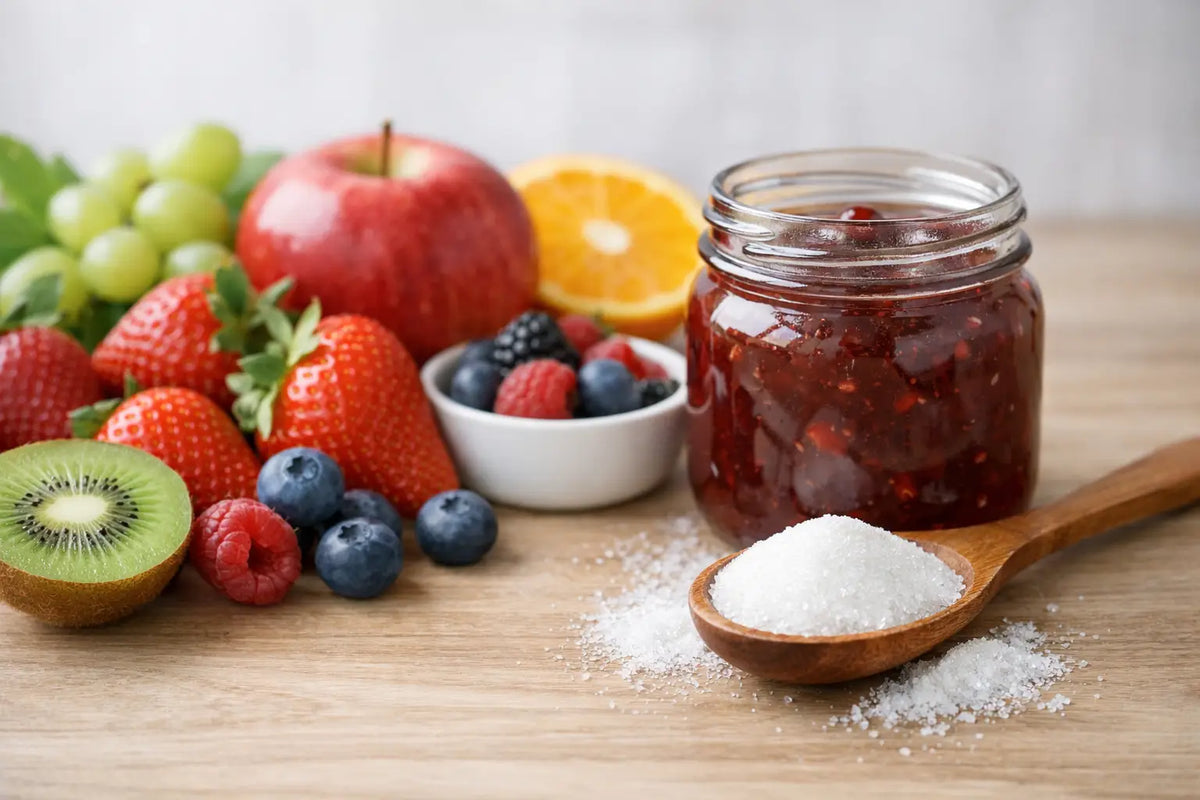
Fruit complicates the picture a little. If a product contains whole or pureed fruit, then the sugars coming from it are naturally present. But if concentrated fruit juice is added purely to sweeten the product, we move into a greyer area and the way the claim is presented needs attention.
That is why one word on the front is not enough. It takes a quick look at the small print on the back too.
What to check on the label before you buy
If you want to genuinely understand what no added sugar means in a product, look at three things together, the ingredient list, the total sugars in the nutrition table and the general profile of the snack.
The ingredient list will show you whether there is an obvious form of added sugar. The nutrition table will show you how much sugar there is in total, natural or not. And the general profile will tell you whether this is something that actually holds you or just sounds healthy.
Because let us be honest, a product can have no added sugar and still not fill you up, be low in protein or rely on heavily processed ingredients. The label is the start, not the whole story.
What no added sugar means for your energy
If your goal is steadier energy, the claim on its own is not enough. What it comes with matters.
A snack with no added sugar that also has a good amount of protein, fibre and real ingredients usually supports satiety better and helps you avoid the familiar crash an hour later. On the other hand, a product that simply has no added sugar but is low in protein and relies only on fast digesting carbohydrates may not give you the steadiness you are after.
In other words, "no added sugar" has value when it sits inside a more functional whole. A clean formula, a taste that does not punish you and a nutritional profile that works in real life.
Is it always the better choice?
It is usually better than an equivalent product with obvious added sugar, but not always and not automatically. It depends on what else it contains, how processed it is and what you want from it.
If, for example, you are looking for a quick snack after the gym or between meetings, you do not only care that the front of the pack reads well. You care that it holds you. That it tastes good without feeling like a supplement. That it is easy to eat and does not leave you hunting for a second coffee or another sweet half an hour later.
That is why the best criterion is not a single phrase. It is the combination, no added sugar, clean ingredients, meaningful protein, nothing unnecessary.
When the phrase can confuse you
The phrase sounds clear, but in the market it is often used as a quick shortcut for "healthier". That is not always a lie, but it is not the full picture either.
A product can have no added sugar and still be full of sweeteners you do not want in your daily life. Or have so little protein and so little staying power that it does not serve you at all. On the other hand, there can be a product with natural sweetness from ingredients like dates, which offers better taste, a cleaner formula and more functional performance through the day.
So yes, the claim has value. It just needs context.
How to judge it quickly when you have no time
Daily life does not leave room for a 10 minute analysis at the shelf. The quick version is simple.
Check whether the ingredients are things you can pronounce. See whether the protein is meaningful or symbolic. Check whether the total sugars reasonably come from the ingredients themselves. And think about whether what you are holding is built to actually serve you or just to look good on the pack.
That is where the products that promise less and deliver more stand out. A clean, premium bar with plant protein, no added sugar, a gluten free formula and real ingredients can be exactly the practical answer you need when you are running from work to training and back again. That is also why brands like Feel Good build their logic around a clean formula and steady energy rather than around impressive but empty promises.
The right question is not only "does it have sugar?"
The more useful question is a different one, where does the sweetness come from and what else does this product give me?
If the answer is that the sweetness comes from real ingredients, that there is good protein, that the formula is clean and that the snack carries you decently until the next meal, then "no added sugar" gains real meaning. Not as an advertising line, but as a selection criterion that works in your life.
Next time you see the phrase on the shelf, do not stop at the front of the pack. Read a little more closely, think a little more practically and pick the one that gives you clean energy, real satiety and taste with no compromises.