A Guide to Plant Protein Bars
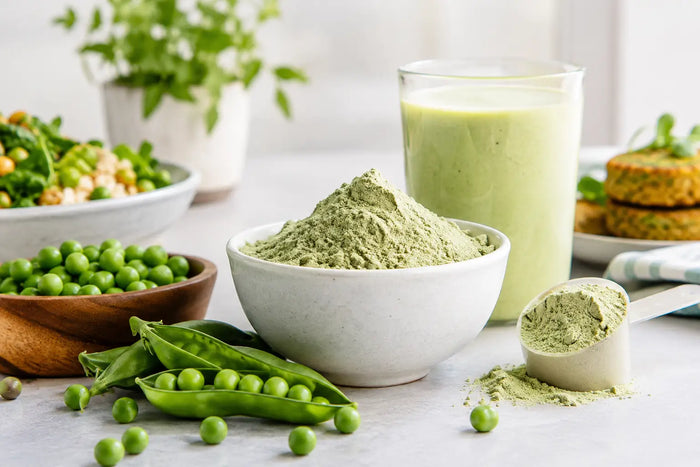
In a plant protein bar, check the protein source and amount per bar, the sugars, the ingredient list and the taste. Feel Good has 18 g of pea protein in a 60 g bar, with no added sugar.
A good snack shows its worth exactly when you need it most, in the gap before a meeting, after training, on the road, between two tasks. That is where a proper guide to plant protein bars makes a difference, because you are not simply looking for something healthy. You are looking for something that keeps you going, has a clean recipe and is pleasant to eat with no second thoughts.
Plant protein bars have come a long way in recent years, but they are not all the same. Some are closer to a sweet that happens to say protein on the pack. Others are so technical and heavy that they end up feeling like a supplement. The right choice sits somewhere in the middle: a functional snack, real ingredients, a clean taste and protein that actually matters in daily life.
A guide to plant protein bars: what really counts
If you only look at the grams of protein on the front of the pack, you are seeing half the picture. The first question is simple: how much protein do you get relative to the size of the bar, and what else comes with it?
A bar with a high plant protein content can be very useful when you want practical support during the day or after activity. But quantity on its own is not enough. If it comes with too much sugar, a lot of syrups or an ingredient list that reads like a lab report, the result loses its value.
The same goes for taste. If a bar is not pleasant to eat, it will not become part of your routine. And if it does not become part of your routine, it solves no real problem. Consistency comes when the snack is clean, practical and tasty at the same time.
How much protein counts as a good amount
There is no magic number for everyone. It depends on whether you want an in between snack, something for after exercise or a solution that holds you until the next meal. Even so, a bar with a meaningful amount of protein has a clear advantage over a plain snack with a token amount added for show.
For most active adults, a bar with around 15 to 20g of protein is a very functional choice. It gives you steadier fullness and helps you avoid hunting for something sweet or rushed half an hour later. If you are often out of the house, that difference shows immediately.
The source of the plant protein matters
Yes, it does. Not only for the nutrition profile, but for the texture, the taste and how easy the bar is to eat. Proteins from pea, rice or blends of plant sources are very common. What matters to you in practice is whether the final product is balanced, not whether the label is full of impressive terms.
When the recipe is properly worked out, you do not get that dusty feel that many protein bars have. That is crucial. You want clean energy, not a punishment in snack form.
Read the label without turning it into science
A good label needs no decoding. If you see things you can pronounce and you understand what you are eating, you are already on the right track. That does not mean every short list is automatically perfect, but simplicity usually works in your favour.
Look at the basics first: protein, sugars, fibre and the ingredients overall. If a bar promises performance but leans mainly on added sweeteners and complicated combinations, it is worth a cooler look.
Sugar, sweeteners and natural sweetness
There is a lot of confusion here. No added sugar does not mean tasteless. Nor does it mean every bar without sugar is equally good. Some products build their taste in a more natural way and others leave a strong aftertaste or an inflated sweetness.
If you prefer a cleaner result, it is worth looking for bars that use natural ingredients for sweetness, such as dates, instead of relying on an artificial dessert effect. The difference shows in the taste and in how you feel after eating it. Fewer tricks, calmer energy.
Gluten free and vegan, when it is substance and when it is just a claim
For a lot of people, vegan and gluten free are not a fashion. They are a practical filter. If you avoid animal ingredients or want a snack without gluten, those two claims simplify the decision a great deal.
It is not enough for them to be on the pack though. What matters is that they come with a sound nutrition profile and a good eating experience. A vegan bar that does not fill you up, or a gluten free bar that feels like an unbalanced sweet, simply is not doing its job.
When it makes sense to eat a plant protein bar
The most honest answer is: when it genuinely suits you. Not because you should. Not because every snack has to be a protein one. A plant protein bar is useful when time is short but you do not want to give up on quality.
As a mid morning snack it can hold you until lunch without sharp dips. Before or after training it works as a practical option when there is no time for a proper meal. And on days when you are running from one place to another, it is how you avoid falling back on something rushed out of habit.
That does not mean it replaces every meal. Nor that you need a bar every day for the same reason. But as a tool for consistency in how you eat, it is one of the simplest solutions there is.
How to tell a bar that is worth it from one that is just well marketed
Here it helps to be a little strict. If the packaging says a lot but the recipe does not back the promise, move on. Good bars do not hide behind buzzwords.
You want high plant protein, not a token amount. You want a taste that stands up without excessive sweetness. You want a recipe that does not confuse you. And you want a snack that can hold its own in daily life, at the office, in your bag, after the gym, on a trip.
A premium bar usually shows in the whole picture. In giving you a good amount of protein, no added sugar, a vegan and gluten free approach, and in not feeling like a processed gimmick. If it also combines real ingredients with consistent production quality, even better. At that point the choice stops being simply healthy and becomes practically reliable.
A guide to plant protein bars based on your way of living
If you work long hours, the main criterion is convenience without a nutritional compromise. You want something easy to open that keeps you going. If you train regularly, you will put more weight on protein content and on how it fits around exercise. If you are simply trying to eat more sensibly through the day, a clean label and no added sugar will probably matter more.
Then there is taste, which many people underrate. Some want more of a dessert experience, others a milder profile. There is no right and wrong here. There is only whether a bar helps you stay consistent without getting bored or feeling like it is a chore.
That is why it is worth trying bars with the use in mind. One suits you after training, another at 11 in the morning, another on a long journey. When you find the one that fits your rhythm, the right choice becomes easy.
The point that usually decides the purchase
In the end, most people do not buy bars because a nutrition table impressed them. They buy because they want a consistent solution that works again and again. That is where a product is judged.
If a bar has a clean taste, a serious amount of protein, real ingredients and does not tire you out, it has a reason to stay in your day. And if you can keep it available without thinking about it every week, consistency becomes even simpler. That is why brands like Feel Good are winning ground: they make vegan, gluten free bars with no added sugar and 18g of protein, built around daily life rather than the shelf.
The best plant protein bar is not the one with the boldest promise. It is the one you open again without hesitating, because you know what you are eating, you like the taste and it gets you through the hours when there is no time for anything unnecessary.