When to Eat a Protein Bar for Best Results
Eat a protein bar when there is no time for a meal: as a mid morning or afternoon snack, before or after training. It is not always a meal replacement.
If you have ever looked for something quick between meetings, travel and training, the question of when to eat a protein bar is not theoretical at all. It is practical. Because the right moment can be the difference between a snack that just gets you to the next meal and a snack that gives you steady energy, better fullness and less picking later on.
The short answer is that there is no single right time for everyone. There are, however, a few moments in the day where a protein bar genuinely fits. And when the bar has a clean recipe, plant protein, no added sugar and ingredients you recognise, it becomes much easier to fit into your day without second thoughts.
When to eat a protein bar during the day
The best moment depends on your goal. You need one thing before training, another after, and something else again when you are simply trying not to be floored by hunger at 4 in the afternoon.
If your goal is steady energy and focus, a protein bar works very well as an in between snack. Those hours between breakfast and lunch, or between lunch and dinner, are usually where the dip starts. Not always from real hunger. Often from tiredness, stress or a lack of planning. A good protein bar helps you hold your energy levels steadier and stops you arriving at the next meal overly hungry.
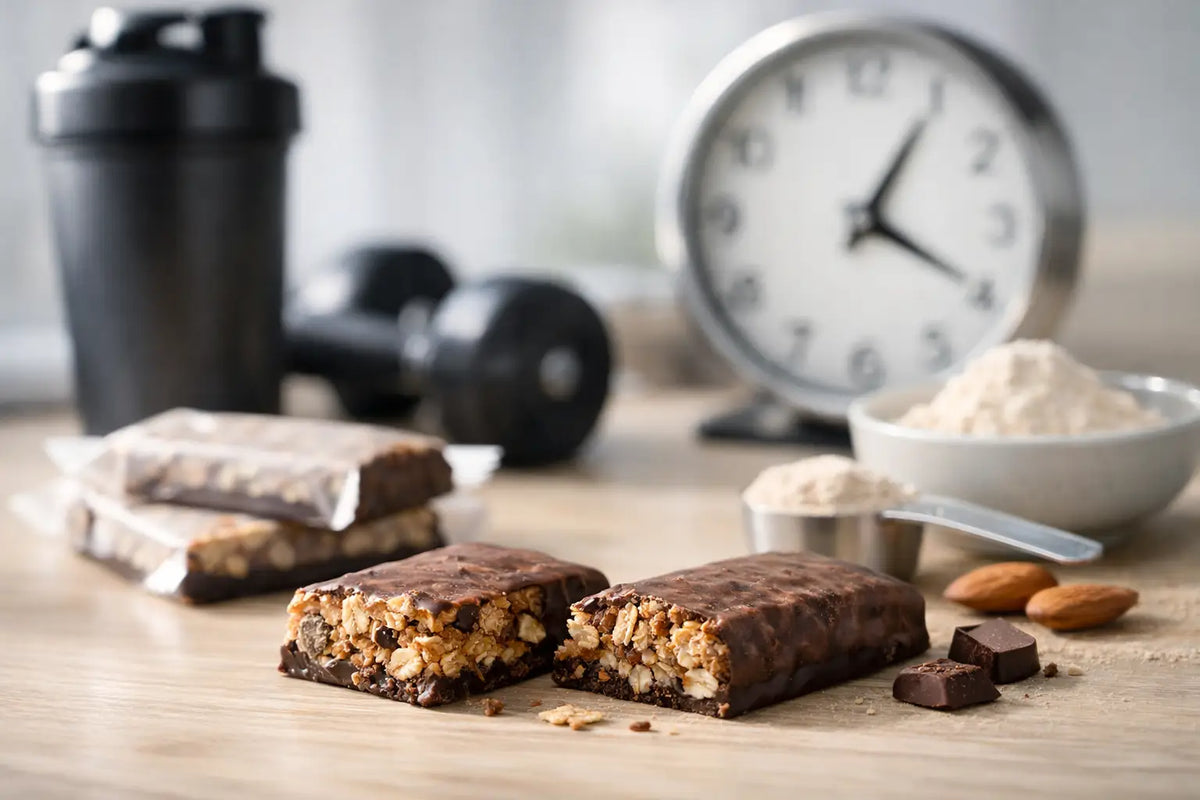
If you train, the answer to when to eat a protein bar gets more specific. Before a workout it can give you fuel, especially if hours have passed since your last meal. After training it can help with recovery, mainly if you cannot eat a proper meal soon. It is not a magic product. It is a practical solution. And often that is what counts most.
A protein bar before training
If you are going to train within the next 60 to 90 minutes, a protein bar can work very well as a pre workout snack, as long as it is not too heavy. The aim here is to give you energy without leaving you bloated.
That is especially useful if you train after work or early in the morning and do not have time for a full meal. In those cases, a bar with plant protein and real ingredients is an easier choice than something random that may leave you with a crash a little later.
There is of course the "it depends" side. If you are heading into a very intense or long session, you may also need a few extra carbohydrates during your day. The bar does not replace your whole nutrition plan. It covers the practical gap when you need something immediate and clean, with no tricks.
A protein bar after training
After exercise, protein makes sense because it helps muscle recovery and keeps you fuller until your next proper meal. If you are finishing a session and you know it will be a while before you eat, that is probably where a protein bar is at its most useful.
There is no need to panic about the so called anabolic window. If you eat a bar within a reasonable time after training, especially when there is no meal available, you have already done something right. What matters is consistency across the day, not perfection down to the minute.
For people with a full schedule, that convenience counts. You leave the gym, get on the metro, into the car or to the next appointment, and you do not have to fall back on the first random snack you see.
As a mid morning or afternoon snack
This is probably the most everyday and most underrated use. A protein bar does not have to be tied to fitness. For a lot of people it is simply the snack that keeps them functioning through the day.
At the office, at university, on the road or before another two hours of tasks, the right bar can help you avoid the classic trap: something sweet that lifts you briefly and then empties you out. When you have protein, natural sweetness and a cleaner label, your snack starts working for you instead of just filling time until the evening.
If you often get cravings in the afternoon, it is usually not a matter of willpower. More often it is that your previous meal did not cover you enough, or that too many hours passed without anything substantial. That is where a protein bar can come in strategically and cut down pointless picking.
Can it replace a meal?
The honest answer is no, at least not routinely. A protein bar is a snack. A smart snack, a functional snack, but not a full meal for every day and every situation.
There are moments where it will genuinely save you, for example when you are out and there is no good option. But an emergency solution is one thing and a habit is another. Main meals give you a wider range of nutrients, more volume of food and usually better fullness for longer.
So if you are wondering when to eat a protein bar, think of it as support between meals or around training, not as a permanent replacement for food.
What to look for so the choice is worth it
Not all bars are the same. And that shows quickly, both on the label and in how you feel after eating one.
A good protein bar has to cover you nutritionally first and taste good second. High protein content is a key point, but it is not enough on its own. It also matters where the protein comes from, how clean the recipe is, whether there is added sugar, whether it sits heavy or whether you eat it and start looking for something else half an hour later.
That is why many people now go for options with plant protein, no gluten, no added sugar and ingredients you can pronounce. It is closer to a real snack and further from an artificial supplement. That is not a detail. It is the reason you can eat it regularly without feeling you are doing a chore to hit your macros.
When not to eat a protein bar
There are also moments when you do not need one. If you have just eaten a full and balanced meal, you probably have no reason to add a bar straight after. The same applies if you eat one on autopilot, out of habit, without actually being hungry.
Also, if a bar bothers your digestion before exercise, that is not the right moment for you. Some people prefer to have it after training or as a snack at calmer times of day. The right use is the one that fits your body and your schedule, not the one that sounds most perfect on paper.
The best time is the one that keeps you consistent
In practice, the best answer to when to eat a protein bar is the moment that helps you keep your day steady. Before training when you need fuel. After it when there is no time for a meal. At your desk when the dip is coming. In your bag so hunger does not catch you unprepared.
What makes the difference is not only timing. It is also the quality of the snack you choose. When you have a bar with 18g of protein, vegan, no added sugar, gluten free and made with real ingredients, like Feel Good bars, daily support becomes much simpler. A clean recipe. Steady energy. No tricks.
You do not have to wait for the perfect moment to eat better. You just need something with you that actually works when you need it.