Dates or Artificial Sweeteners for Your Snack?
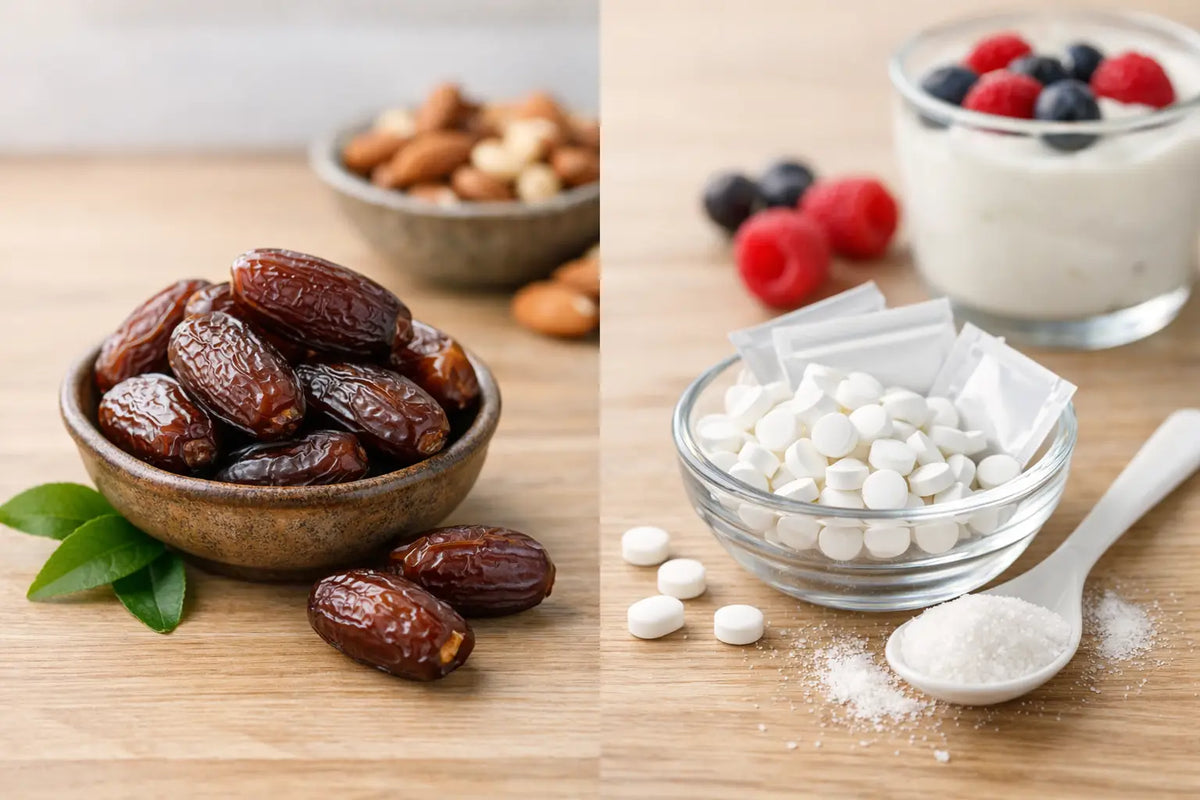
Dates sweeten with natural sugars and bring fibre. Artificial sweeteners add almost no calories but taste different. If you want few, simple ingredients, dates are the cleaner option.
The 16:30 snack does not have to be another hard decision in front of the shelf. You want something sweet, but not a product with a label that reads like a laboratory. In the dates or artificial sweeteners question, the right choice is not the same for everyone. But the label, the portion and the reason you are eating the bar make a big difference.
If you are after steady energy, a taste with substance and ingredients you can pronounce, it is worth looking past the words sugar free. Removing sugar is one thing. Choosing what gives your snack its sweetness is another.
Dates or artificial sweeteners: the basic difference
A date is a real fruit. It is often used in bars as a paste or puree and it gives natural sweetness, a soft texture and a full caramel taste. With it come natural sugars, some fibre and small amounts of micronutrients. It is not a magic ingredient, and it does not mean you can ignore the portion. But it is something simple and recognisable.
Artificial sweeteners, on the other hand, give strong sweetness with very few or no calories. You find them often in soft drinks, desserts and products aimed at very low or zero sugar. Their use is permitted within set amounts and assessed for safety. That does not automatically make them a bad choice.
The difference lies more in the experience and in the role of the product. Do you want a sweet element in a proper snack with protein and texture? Or do you want the most sweetness possible with the smallest calorie footprint? Those are two different needs.
What a date gives you in a bar
A date is not added only to make a bar sweet. It helps the ingredients hold together, it adds a natural chewy texture and it reduces the need for complicated solutions. Combined with plant protein, nuts or other sources of fibre, it can create a snack that fills you up more meaningfully than a sweet taste on its own.
Its flavour is rounder too. It does not try to imitate sugar. It is fruit flavour, with depth and character. For many people that means a bar does not have to be very sweet to be enjoyable.
There is also the question of the clean label. When you read dates, you know straight away what that is. That alone is not a nutritional criterion, but it makes the choice more transparent. Things you can pronounce. No tricks.
Dates contain natural sugars, and that counts
Natural does not mean unlimited. Dates contain sugars and calories, so the portion of a bar still matters. If you follow a specific eating plan, track your sugar intake or have a medical condition that affects blood sugar, you need personalised guidance from a health professional.
For the average person running from a meeting to training and from training to a class or a commute, the question is practical: what else is in the bar? If the dates are combined with a decent amount of protein rather than simply more sweetness, the picture changes.
When artificial sweeteners have their place
Artificial sweeteners can help people who want to limit calories or sugars very strictly without giving up sweet taste. In some cases they can work as a transition tool for someone trying to move away from very sugary foods.
Not everyone reacts the same way to their taste or to digesting them. Some people find that certain sweeteners leave an aftertaste. Others feel discomfort when they often eat products with polyols such as maltitol or erythritol. And for some, there is simply no problem at all.
The important thing is not to read sugar free as an automatic mark of quality. A product can have zero added sugar and still be heavily processed, have too little protein or not hold you at all. Sweetness is only one part of a bar.
Do not choose from the front of the pack alone
The big words on the packaging grab your attention. The ingredient list tells the truth. You do not have to become a dietitian to make a better choice. You have to look at the product as a whole.
First, look at the protein. A bar for the office, after the gym or between commitments is worth more when it gives real support and not just a sweet taste. Then look at the source of the sweetness and how high it appears in the ingredient list. Finally, check whether the label is understandable and whether the taste comes from ingredients that fit what you want to eat every day.
A good bar does not have to make you choose between taste and function. It can have plant protein, be vegan and gluten free, and still be enjoyable without relying on excess.
The right choice depends on the moment
Before a full day, a bar with dates and protein can be a more complete choice than a product that only delivers strong sweetness. After training, the protein and the whole recipe matter more than whether the taste comes from dates or from a sweetener. And if your priority is to cut sugars strictly for a specific reason, a product with sweeteners may fit your plan better.
There is no need for dietary dogma. There is a need for choices you can keep. The snack you actually have in your bag, at the office or in the car is more useful than the perfect option you never eat.
Why balance beats sweet excess
A very sweet taste, whether it comes from sugar or from sweeteners, can leave you feeling you ate a dessert rather than a snack. A bar with balanced sweetness, plant protein and real ingredients fits into your day without making any noise.
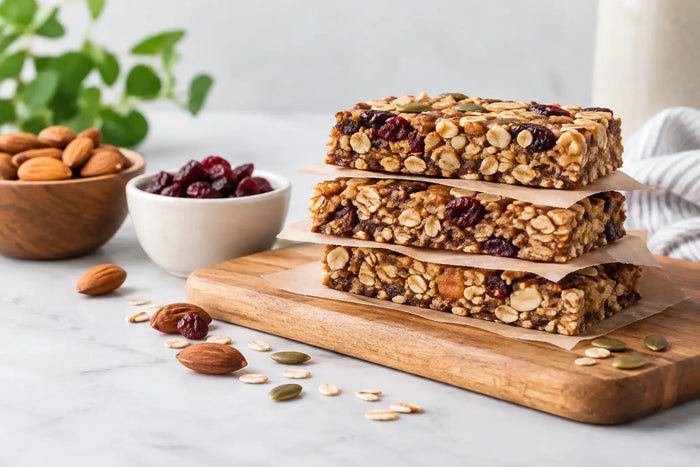
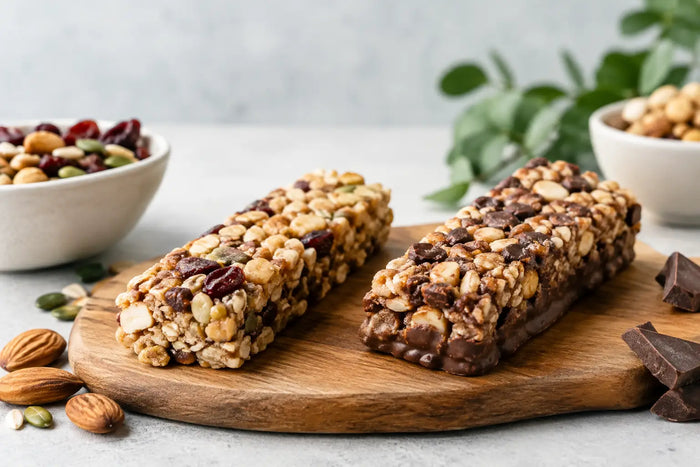
That is why in Feel Good bars the sweetness comes from royal dates, together with 18g of plant protein. The logic is not to hide the ingredients behind an overly sweet taste. It is to give you a practical option that you enjoy eating, that you understand, and that can follow you through a full day.
The next time you face the dates or artificial sweeteners question, do not look for an absolute answer. Choose the snack that fits your goal, reads clearly and keeps you close to the habits you actually want to build.