Natural Sweeteners: What Is Actually Worth Choosing
Natural sweeteners include dates, honey, stevia and fruit. They are not all the same: dates also bring fibre, honey is not vegan and stevia has no calories. Read the ingredient list.
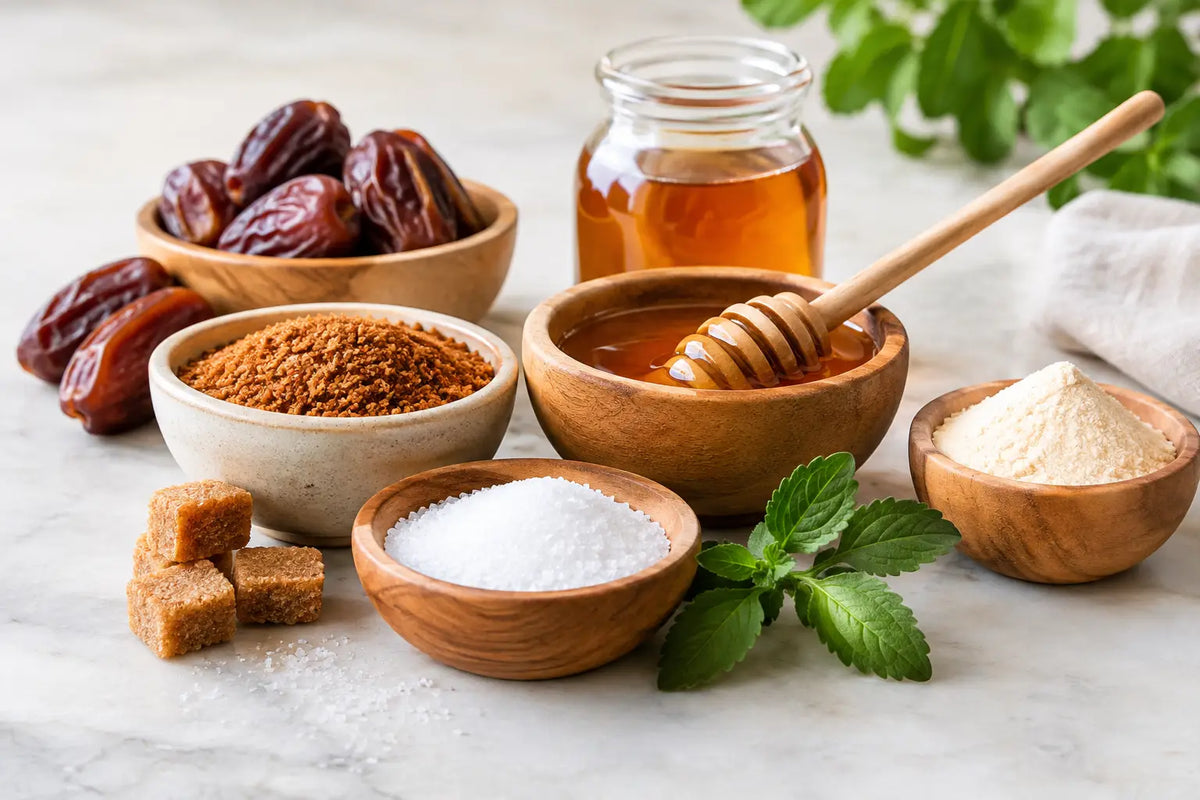
The phrase natural sweeteners sounds simple. On the shelf it can mean very different things: dates and honey, but also syrups, concentrated juices and high intensity sweeteners. If you want a snack with clean ingredients and energy that lasts, the front of the pack is not enough. You look at what is inside.
Sweet taste is not the enemy by itself. What matters is where it comes from, how much of it there is, what job it does in the recipe and whether the product gives you more than a short moment of pleasure. Things you can pronounce. No tricks.
What natural sweeteners actually are
A natural sweetener is usually an ingredient that comes from a plant or another natural source and adds sweet taste to a food. That does not automatically mean every natural sweetener has the same nutritional value, or that you can eat it without limit.
A date, for example, is a whole food. It gives sweetness, but it brings fibre and its own natural components with it. A syrup may come from a plant, yet it is still a more concentrated form of sugars. The source matters, and so does how processed the ingredient is before it goes into your snack.
There are also sweeteners like stevia, which comes from the leaves of a plant and is used in very small amounts because its sweetness is very intense. It does not work the way a date works in a bar: it adds no bulk, no texture and none of the other nutrients of the fruit. That is why there is no single right answer for everyone. There is the choice that fits your goal and the whole composition of the product.
Dates: sweetness that does more
In a functional snack, dates can play two roles. They give natural sweetness and they help the ingredients bind together, so the bar has a soft, filling texture without leaning on sugar or artificial fixes.
That is practical when the day is busy. You want something with taste, something that fits in your bag and does not feel like a compromise. A good bar does not need to remind you of a diet or a lab. It needs to cover you between meetings, before training, at school or on the way home.
Royal dates are a clear example of an ingredient with an obvious job: recognisable, tasty and functional. It does not mean a bar stops having calories or natural sugars. It means you can see where the sweetness comes from, instead of hunting for terms that say little about your everyday choice.
No added sugar does not mean not sweet
This is where most of the confusion happens. A product with no added sugar can still contain natural sugars from fruit, such as dates. The difference is that no extra sugar has been added to the recipe to make it sweeter.
It is not a word game. It is useful information, as long as you read the rest too. If the sweetness comes from real ingredients, if the bar combines protein and fibre and if the portion fills you up, the experience is different from a snack that leans mostly on sugar and leaves you looking for the next one an hour later.
No added sugar is not a licence to overdo it. It is a good reason to look at the product more closely. A good choice is not built on guilt. It is built on consistency.
How to read the label without losing time
The label does not have to become a second job. A few points are enough to tell whether a snack fits the way you want to eat.
First, look at the ingredient list. Ingredients are usually listed in order of quantity. If you recognise most of them and understand why they are there, you have a good first filter. Dates for sweetness and texture, nuts for taste and fats, plant protein for more satiety: simple logic.
Then look at the protein per serving. Sweet taste on its own is not enough to carry you through a full day. Protein makes a snack more substantial, especially if you eat it after training or at hours when a proper meal is not an option.
Finally, check what the pack promises and whether the composition backs it up. Vegan, gluten free and no added sugar are useful features when they match your needs. You do not need ten claims to choose well. You need clear information.
When stevia, when dates and when nothing?
The answer depends on what you are looking for. If your priority is intense sweetness from a minimal amount of sweetener, stevia can have a place in certain products. Some people like the taste, others notice an aftertaste. It is purely a matter of preference.
If you want the sweetness to come from a whole, recognisable food, dates sit closer to the logic of real ingredients. They add character, texture and a fuller taste. On the other hand they do not suit every recipe, and not every food has to be sweet to be enjoyable.
There are also moments when the best choice is simply a less sweet snack. Balance is not built on bans. It is built when you have options that fit your routine and do not push you into excess later.
Taste does not have to cost you a crash
The problem with many quick snacks is not only the sugar. It is that substance is often missing. They have a strong taste but very little protein, little real food and no intention of keeping you full.
That is why composition matters more than marketing. A snack with plant protein, careful ingredients and sweetness from dates can be part of a practical everyday solution. Feel Good combines 18g of plant protein with royal dates, in a vegan and gluten free recipe, for the moments when you need taste and performance in the same bar.
There is no magic ingredient. There is the best choice for the moment: something you enjoy eating, something you know the contents of and something that helps you carry on without a needless crash.
Next time you pick up a snack from the shelf, do not only ask whether it is sweet. Ask where the sweetness comes from, what comes with it and whether what you are holding is made to actually support you.